Sleep Researcher Reveals The “Nighttime Pressure Switch” That May Help Tired Adults Stop Waking Up At 3 A.M. — Without Mega-Doses Of Melatonin
IMPORTANT HEALTH UPDATE May take up to 10 seconds to load.
Make sure your sound is on
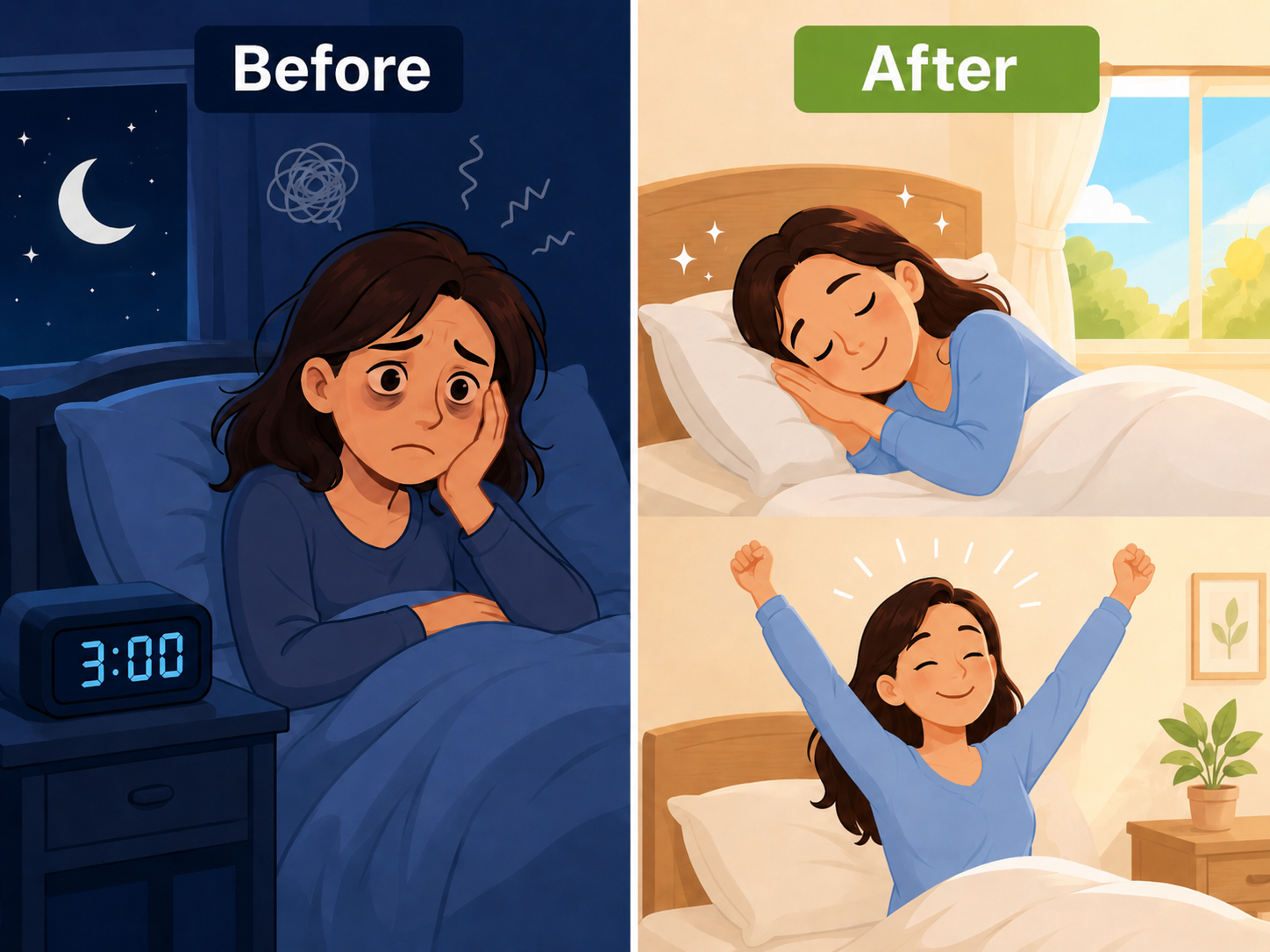
You crawl into bed exhausted, shut your eyes… and somehow your brain just won’t power down.
Then the same frustrating cycle starts all over again: tossing, turning, checking the clock, waking up in the middle of the night, and feeling like your whole night is already ruined.
Maybe you’ve tried melatonin, sleepy teas, meditation apps, cutting back on coffee, or going to bed earlier… but nothing seems to stop those brutal 3 A.M. wake-ups.
And the worst part isn’t just the bad night of sleep. It’s the next day.
You wake up feeling heavy, foggy, short-tempered, and drained… leaning on coffee just to feel like a normal human being again.
Over time, it starts to touch everything: your mood, your relationship, your productivity, your confidence, and even the way you see yourself in the mirror.
But a new explanation is getting attention because it completely changes the way people look at poor sleep.
According to this approach, the problem may not be “getting older,” “being anxious,” or “lacking discipline”…
It may come down to an internal system known as sleep pressure.
This system is supposed to tell your brain when it’s time to shut down, fall into deeper sleep, and stay asleep through the night.
But modern stress, artificial light, racing thoughts, and certain nighttime habits can scramble that signal.
And here’s the part that’s frustrating: for years, people were told to simply “knock themselves out” with heavy sleep aids…
Instead of supporting the natural mechanism that helps the body sleep the way it was meant to.
After years of looking into sleep and nighttime recovery, a researcher mentioned in the presentation, Dr. Collins, reportedly noticed something strange.
Many people didn’t just need to “fall asleep faster.”
They needed to help the brain rebuild the natural signal that builds during the day and keeps the body resting through the night.
It’s almost like your brain has an internal sleep switch…
But for millions of tired adults, that switch may be getting the wrong signal.
That’s why this discovery doesn’t rely on a heavy-handed approach or massive doses of melatonin.
Instead, it focuses on a combination of natural nighttime signals linked to relaxation, circadian rhythm, and a racing mind.
Some of the key elements mentioned include tart cherry, 5-HTP, vitamins B6 and B2, magnesium glycinate, apigenin, lemon balm, L-theanine, GABA, and a low dose of melatonin.
But the most interesting part is the idea behind it:
Helping your body remember how to sleep — instead of forcing it to shut down.
And that’s exactly why so many people who thought they had “tried everything” are now paying close attention to this short presentation.
The official page mentions over 36,498 reviews and several stories from people who were tired of waking up in the middle of the night.
One 56-year-old woman said she thought waking up at 3 A.M. was just part of getting older…
Until she reported sleeping through the night again and waking up actually feeling rested.
Another story stands out because it was tracked with a wearable device.
One user said her deep sleep went from an average of 37 minutes per night to consistently over 1 hour after two weeks.
She also reported that her readiness score jumped from the 50s into the high 80s, along with better recovery.
Of course, that doesn’t mean everyone will have the exact same experience.
But it does explain why this approach is getting attention from adults who don’t just want “more sleep”…
They want to wake up feeling like themselves again.
If you’re tired of waking up at 3 A.M., dragging yourself through the day, and being told it’s just “normal aging,” this short presentation is worth watching while it’s still available.
It explains how the sleep pressure system works, why so many common nighttime tricks fail, and how this natural method may help your body get back to deeper, calmer, more restorative sleep.
This site is not a part of Google, Inc. or Google.com, nor is it sponsored or endorsed by Google. This is an advertisement and not an actual news article, blog, or consumer protection update. Individual results may vary.
Copyright © 2024 Health Pro News LLC – All Rights Reserved
This site and the products and services offered on this site are not associated, affiliated, endorsed, or sponsored by Clickbank, nor have they been reviewed, tested, or certified by Clickbank.